Summer 2024 · Workshop final project
Apex Edge
- Term
- Summer 2024 · 6 credit hours
- Type
- Workshop final project
- Site
- Auburn University
- Scale
- Small
- Method
- Rule Based Variation
Rule-based variation establishes a consistent set of geometric and spatial rules (grid spacing, panel density, and directional layering) while allowing controlled differences to emerge within those constraints.
This approach creates a gradient between public and private space, where openness is not fixed but shifts based on how the rules are applied. Denser screens and tighter grids produce enclosure and privacy, while expanded spacing and alignment create permeability and public interaction. Rather than defining spaces explicitly, the system generates spatial conditions that adapt, allowing boundaries to remain fluid and responsive to use.
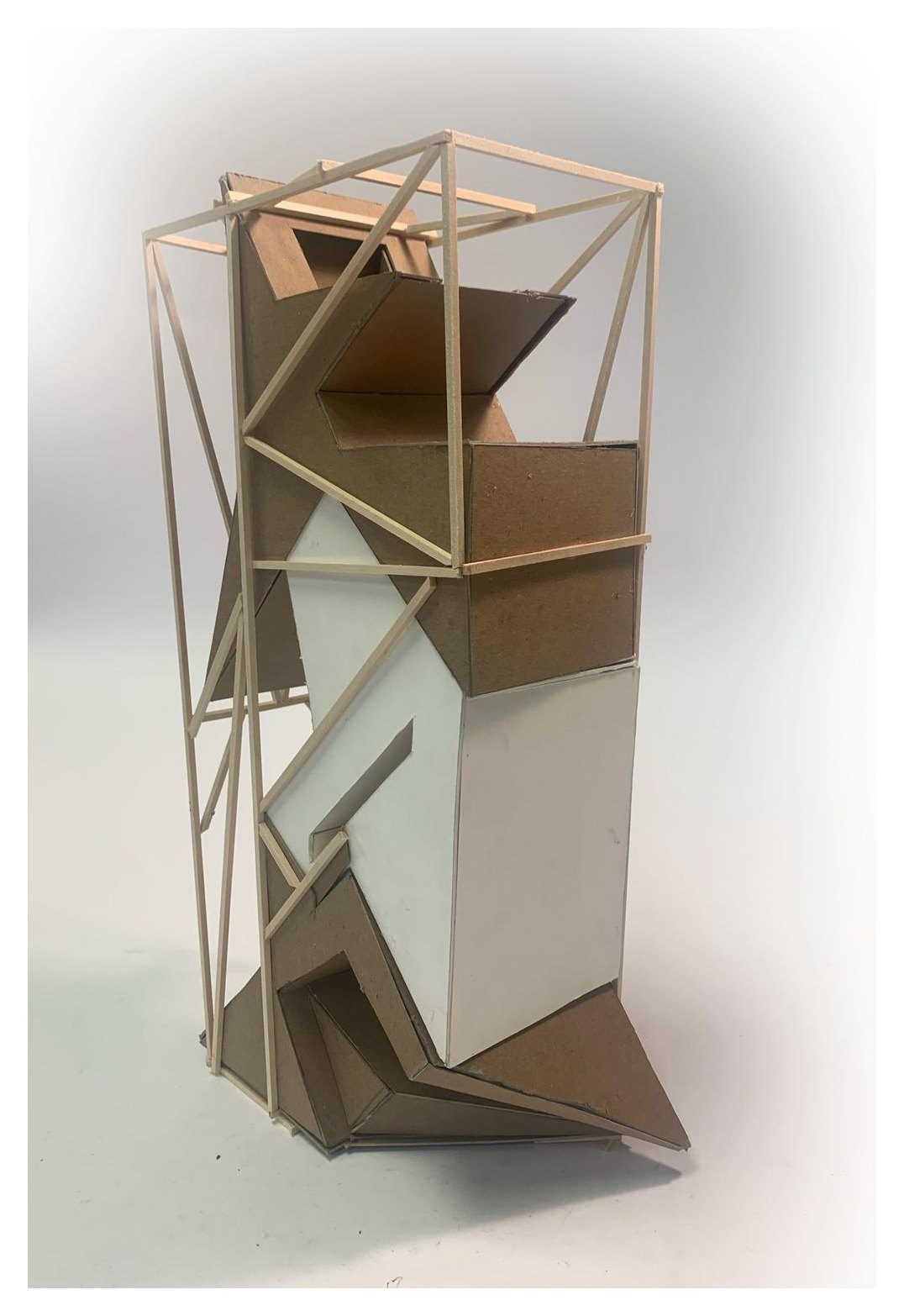
Above: Final model: chipboard, basswood frame, layered panels
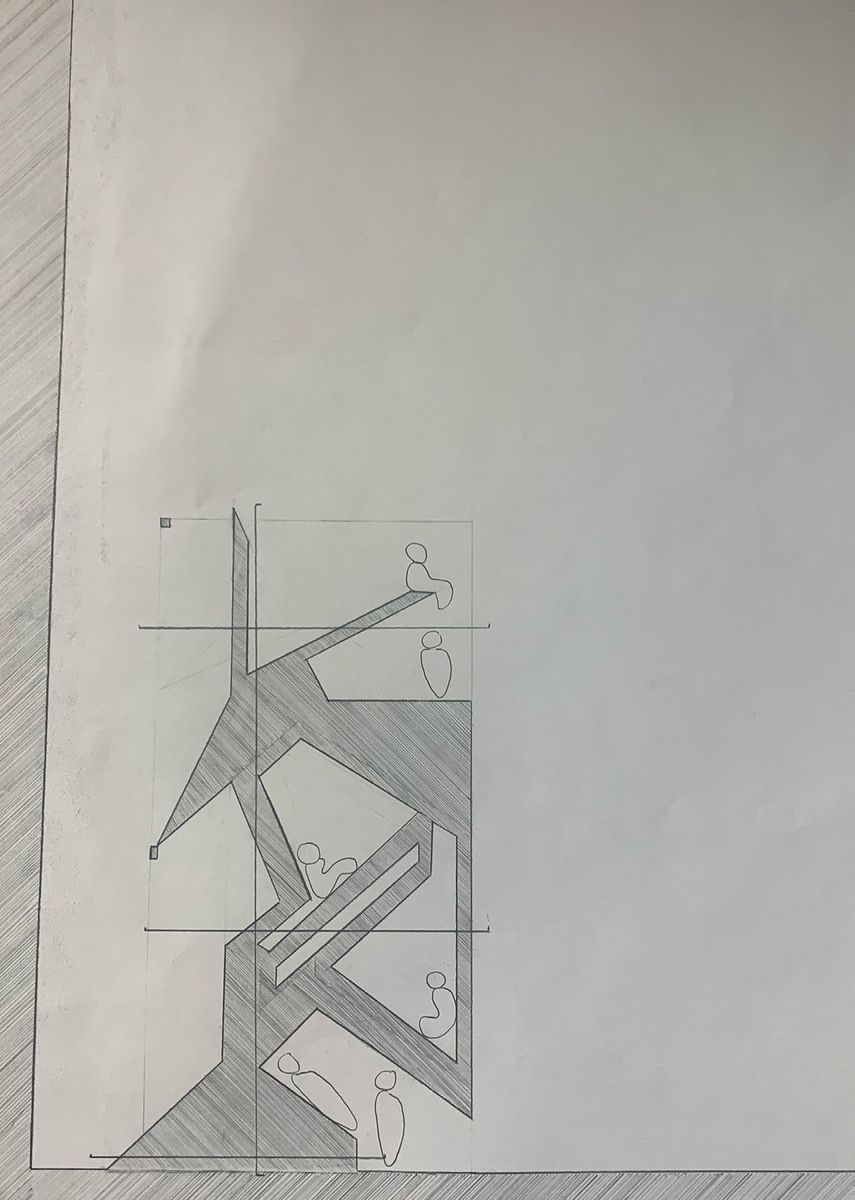
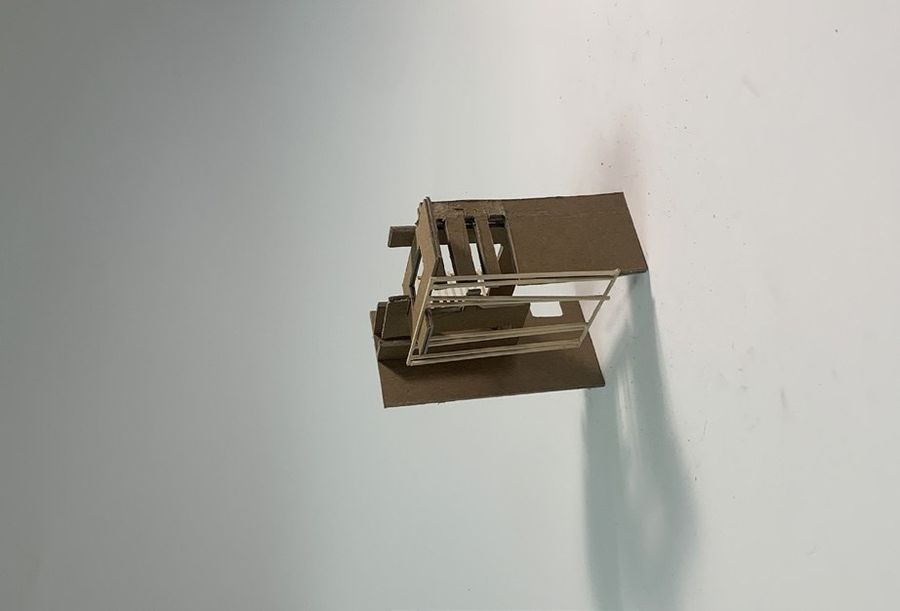
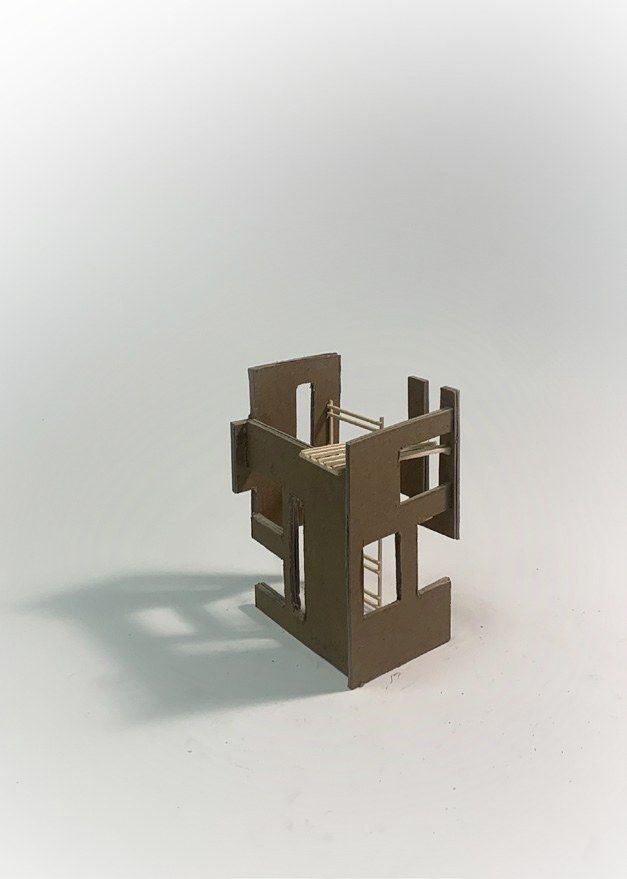
Sketch and study models
The section sketch sets the rule: figures occupy the gaps the screen leaves. The study models test how far the spacing can open before enclosure stops reading.