Fall 2025 · Fabrication folly
Silent Oculus
- Term
- Fall 2025 · 3 credit hours
- Type
- Fabrication folly
- Site
- Auburn University campus
- Scale
- Medium
- In collaboration with
- Canaan Rager, Eva Feinman, Marissa Liriano
- Method
- Systems Based Thinking, Rule Based Variation
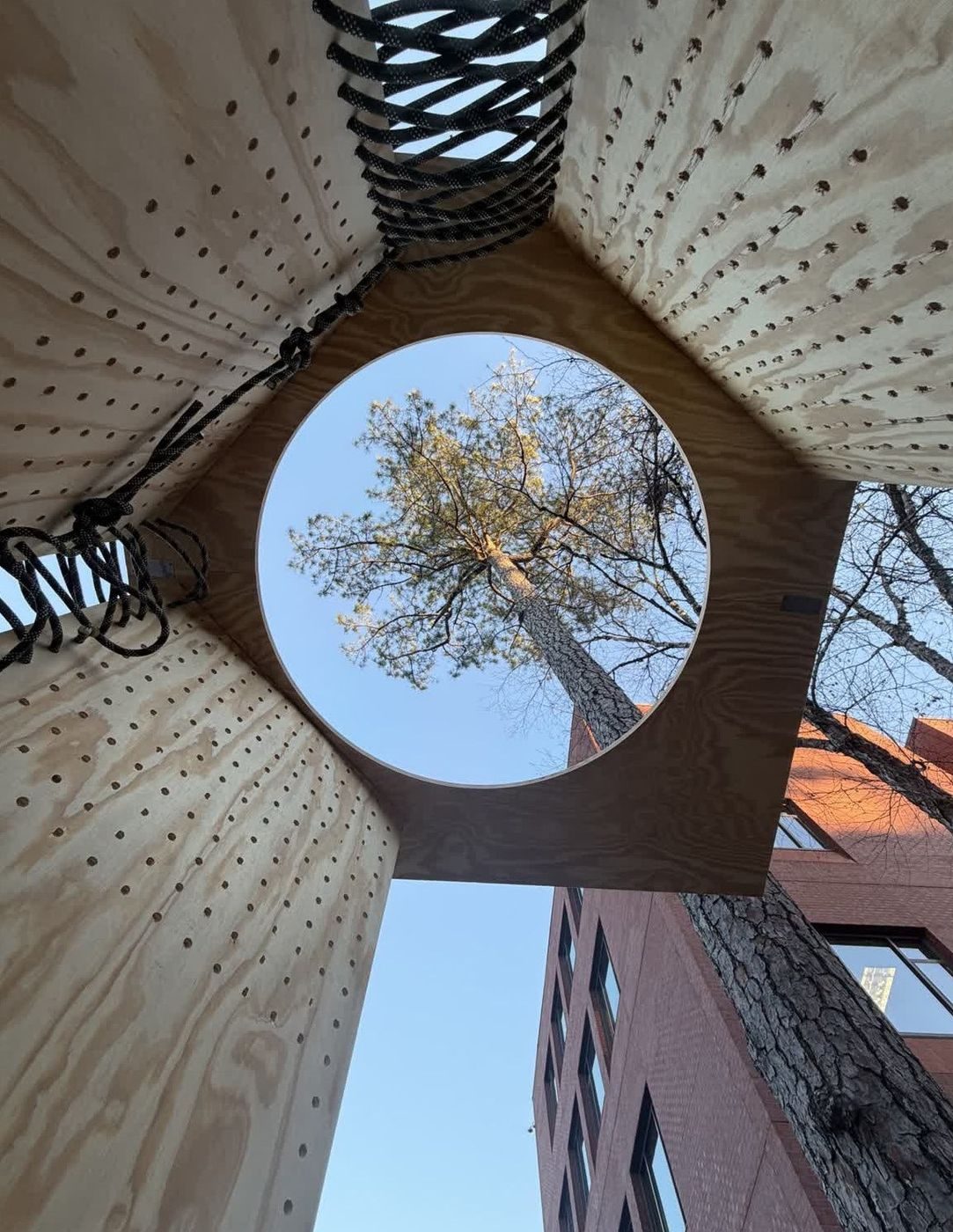
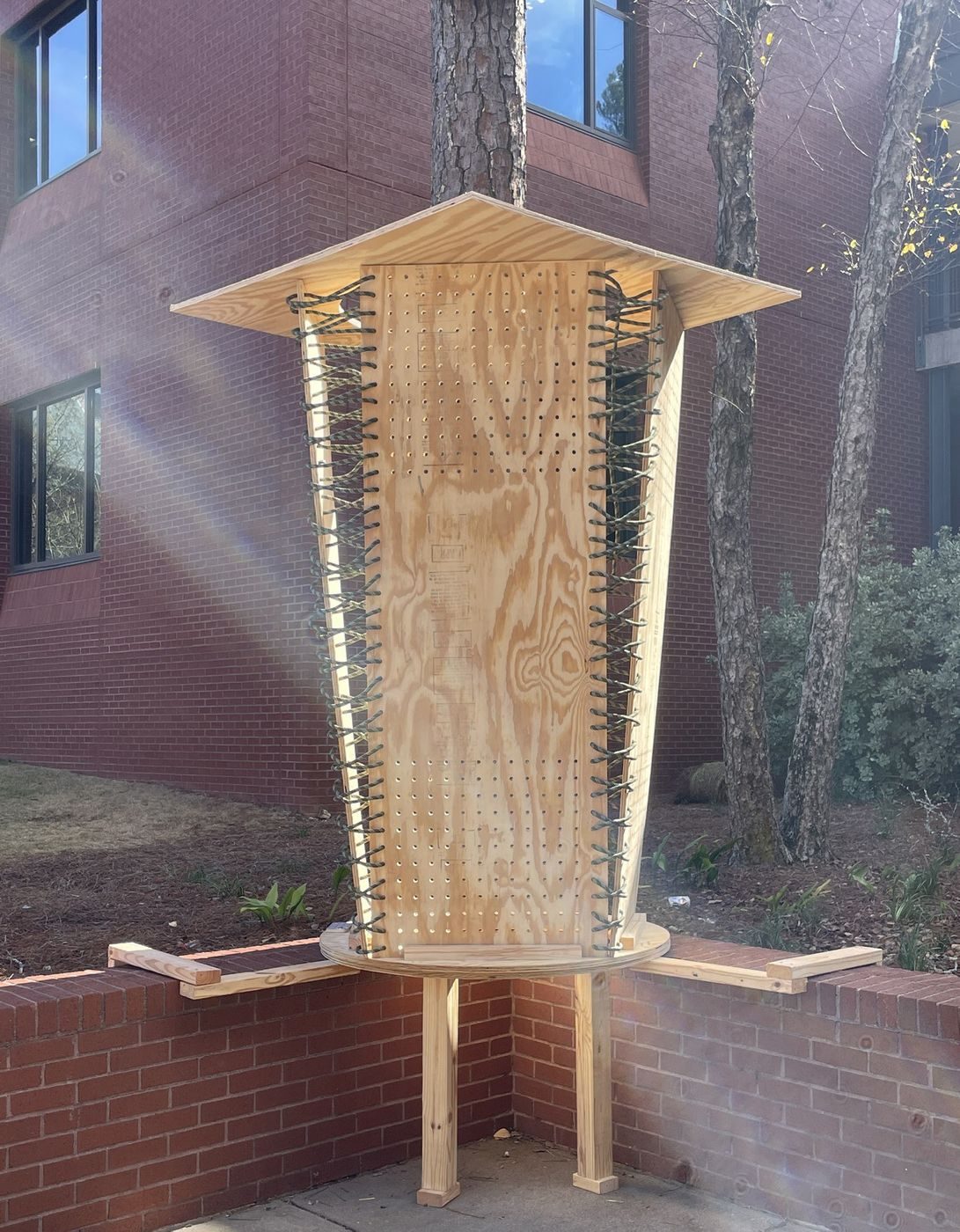
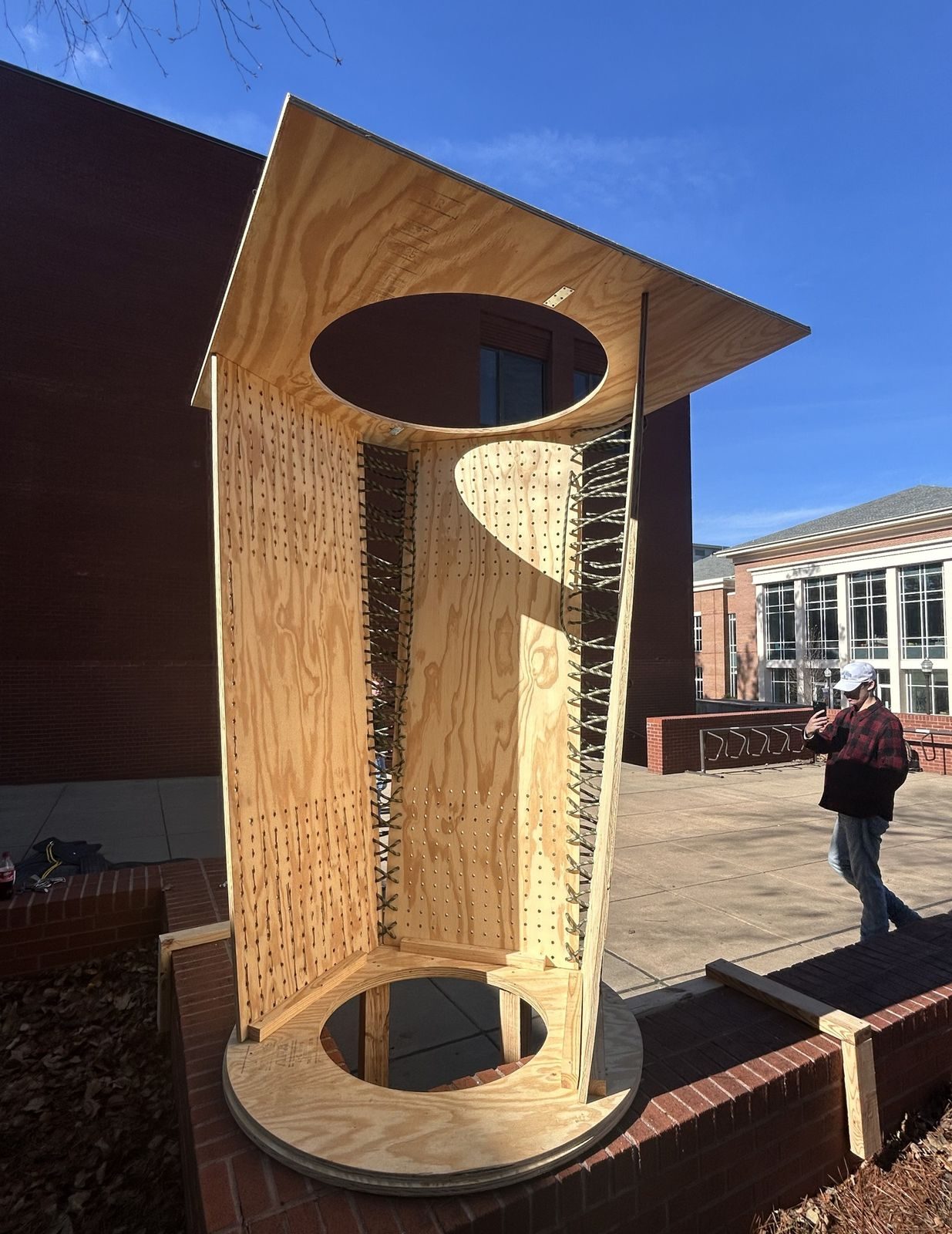
The Silent Oculus is conceived as an outdoor room for retreat. It is an interactive folly that privileges openness, airflow, and psychological ease. It operates as a constructed atmosphere, emerging from a systems-based logic where structure and sensation are inseparable.
Perforated timber surfaces filter light, air, and sight lines, producing a shifting interior that invites pause. Its form is rule-based. Digitally modeled and CNC-milled, each panel is fabricated and assembled through simple joinery of tensioned cords and mechanical fixings, enabling rapid deployment, adaptability, and replication as a lightweight, atmospheric intervention.
Above: Looking up through the oculus: filtered light and framed canopy
Materials and assemblies
The folly is composed of lightweight perforated plywood panels held within a tensioned cord strapping system, enabling rapid assembly, disassembly, and reconfiguration. Each component is designed for minimal weight, allowing the structure to be transported, re-sited, and re-anchored within changing landscapes. Dry, reversible connections replace permanent fixings, renegotiating permanence.
Kit of parts
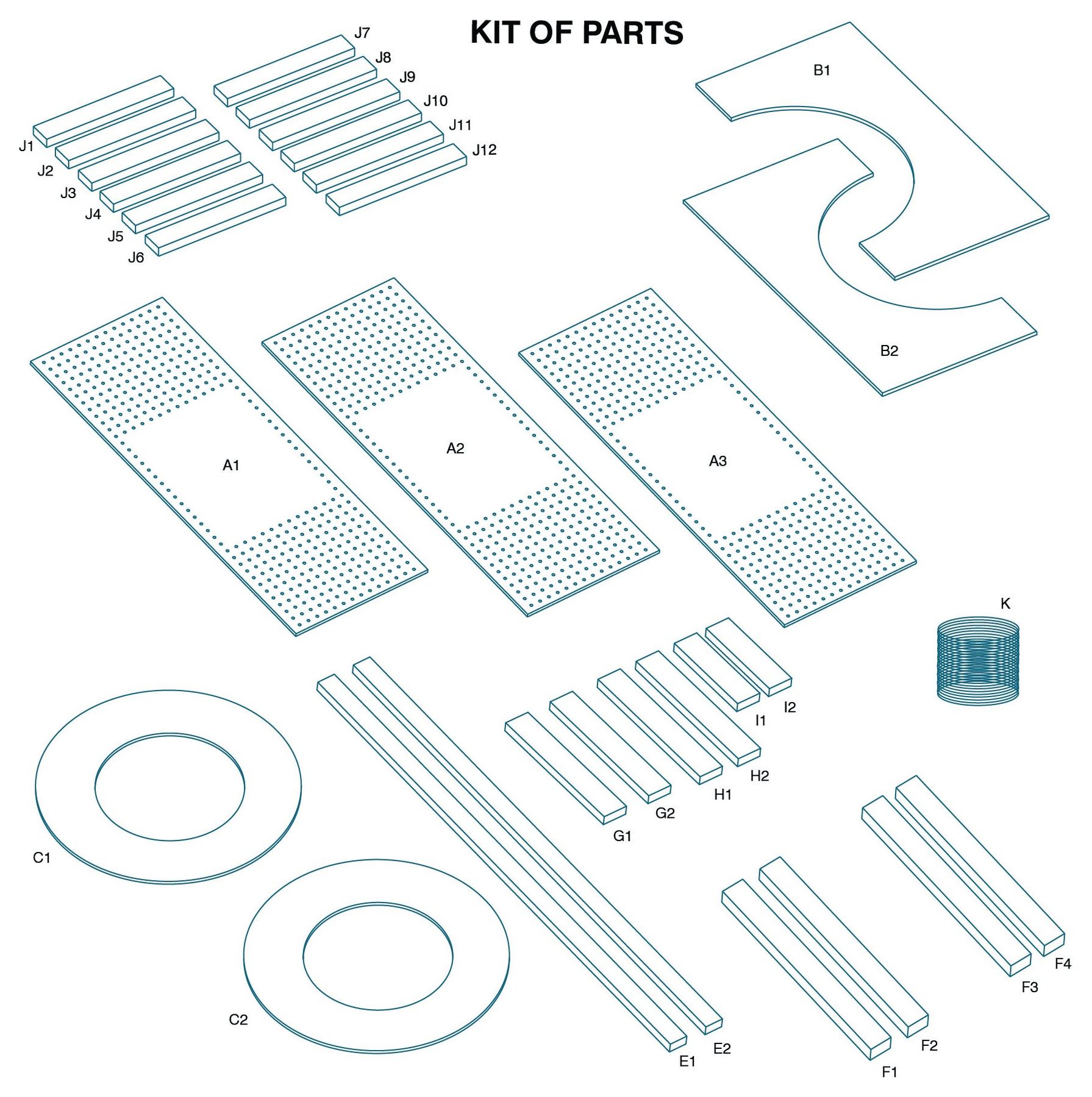
Thirty-two components, every one cut flat: three perforated plywood panels, two curved plates, two rings, four grades of batten, twelve slats, and the coil of cord that holds the whole thing in tension. Each part carries a number, so the folly can be struck, moved, and rebuilt by people who were not there the first time. The drawing is the assembly instruction as much as it is a description.