Fall 2025 · Studio
Zephyr Conflux
- Term
- Fall 2025 · 6 credit hours
- Recognition
- Land Art Generator Design Contest, class finalist
- Type
- Studio
- Site
- Freshkills Park, New York
- Scale
- Large
- Method
- Systems Based Thinking, Operative Abstraction
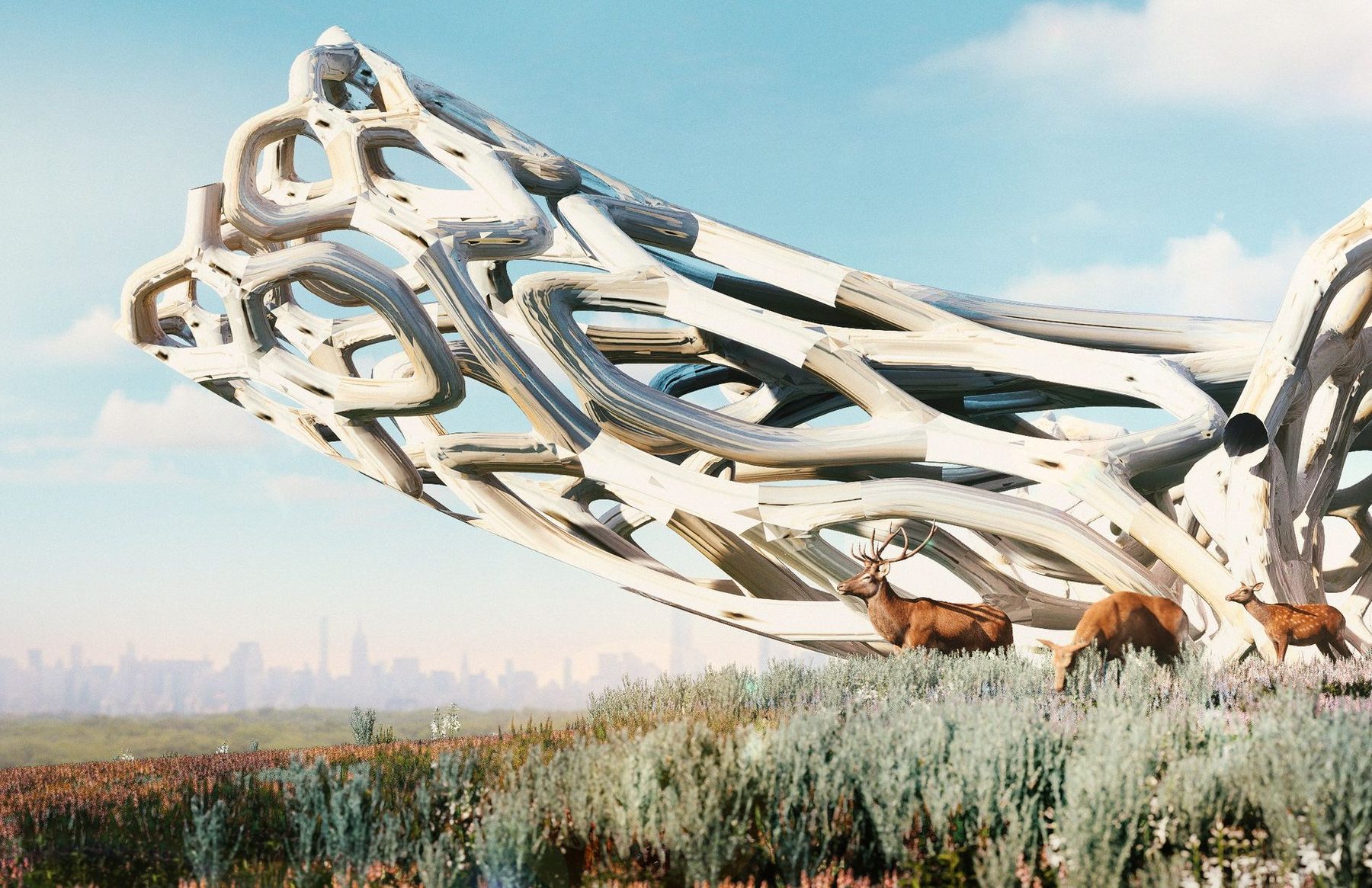
This project at Freshkills Park, New York, emerges from a wind-rose analysis of localized and shifting wind and field conditions. Conventional windmills capture energy from a single dominant direction, limiting efficiency and often disrupting ecological systems.
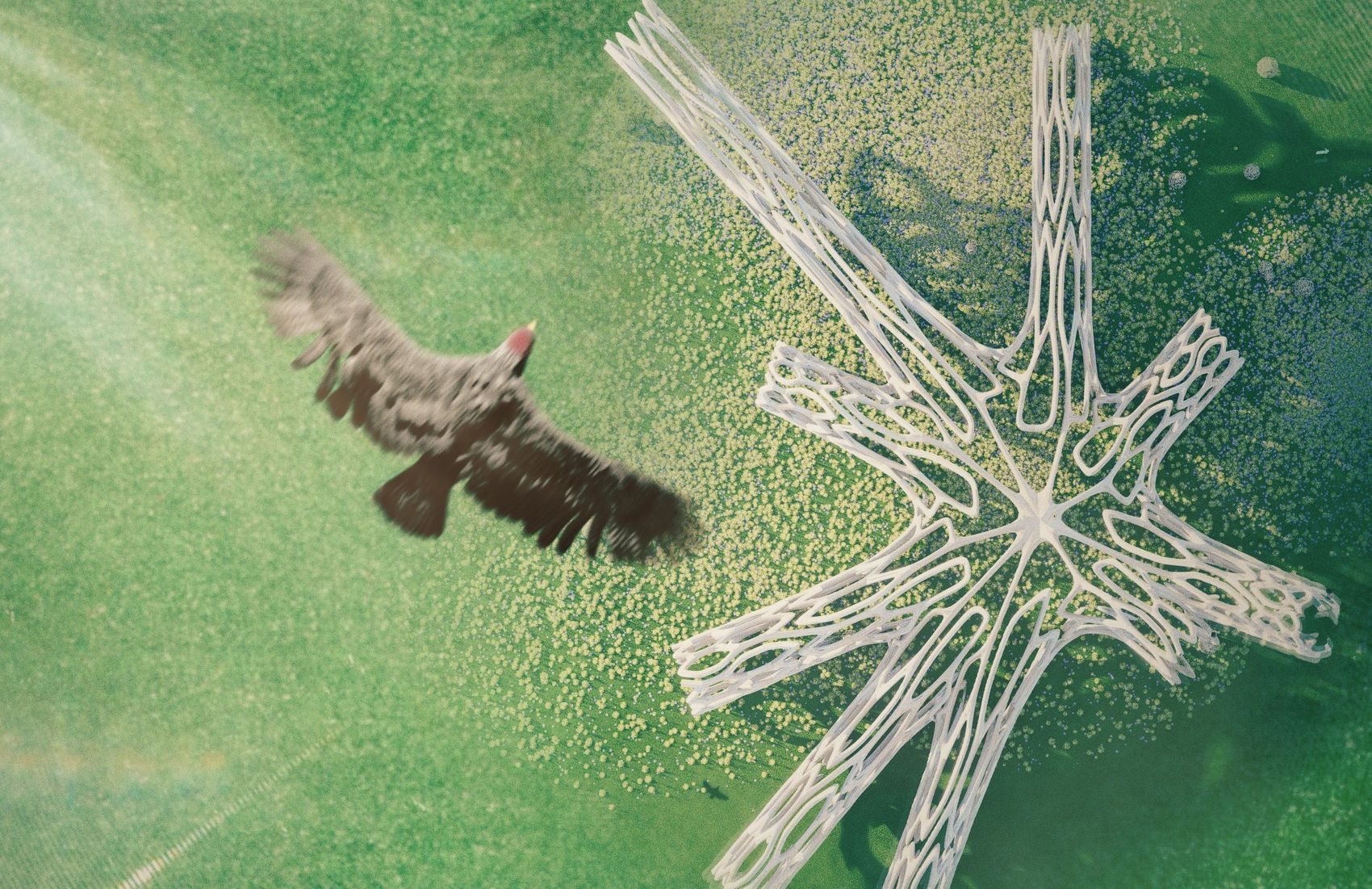
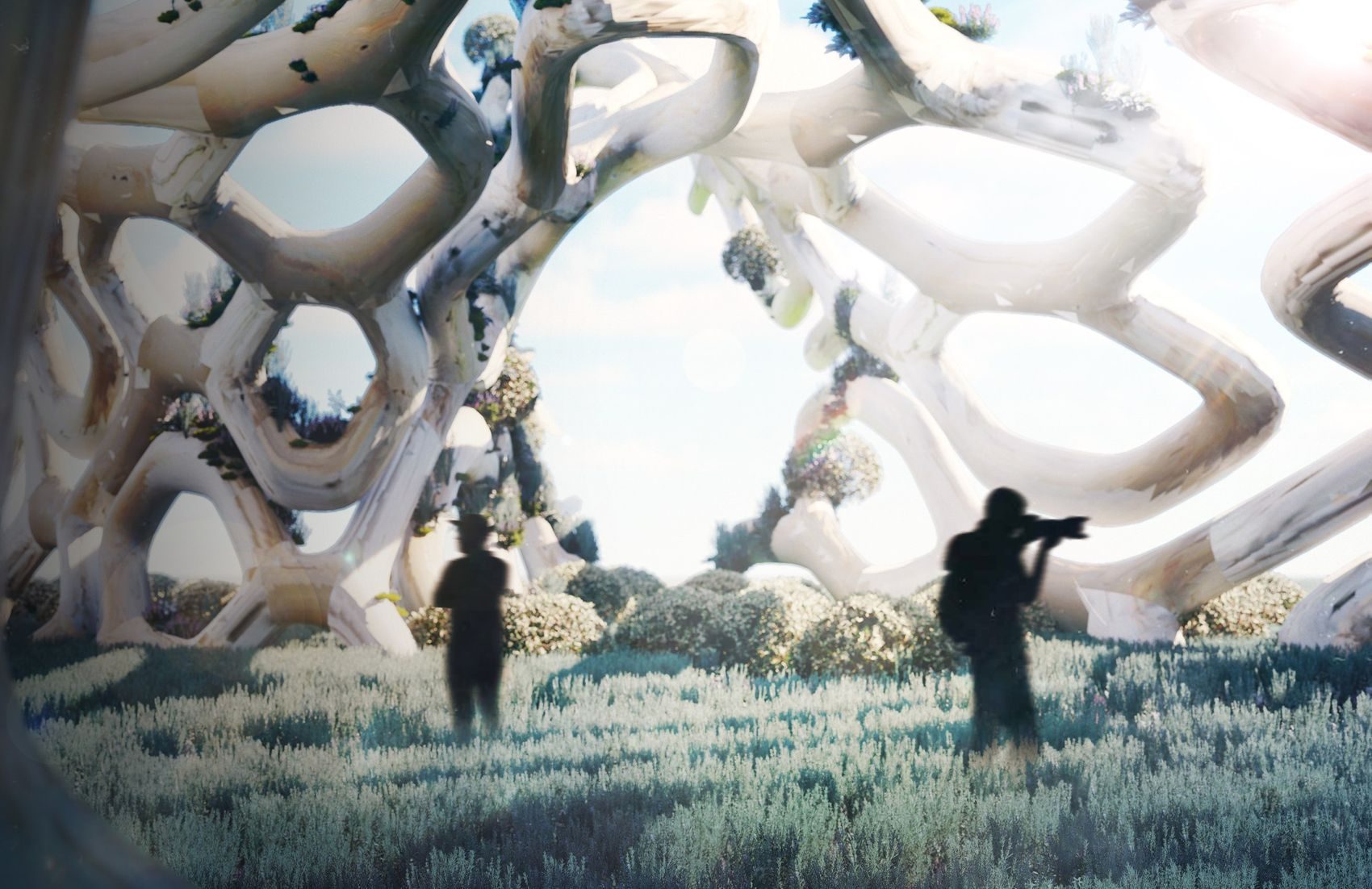
The proposal speculates on an alternative: a field device capable of responding to multiple, changing wind vectors while enclosing sensitive habitats to protect migratory species. A parametric landscape folly formed through a system of intake and exhaust valves, modulating airflow.
Constructed from tubular composite aluminum, the structure operates as both infrastructure and ecological membrane, negotiating energy, wildlife, and landscape.
Above: Approach view: tubular composite aluminum against the Manhattan skyline
The site
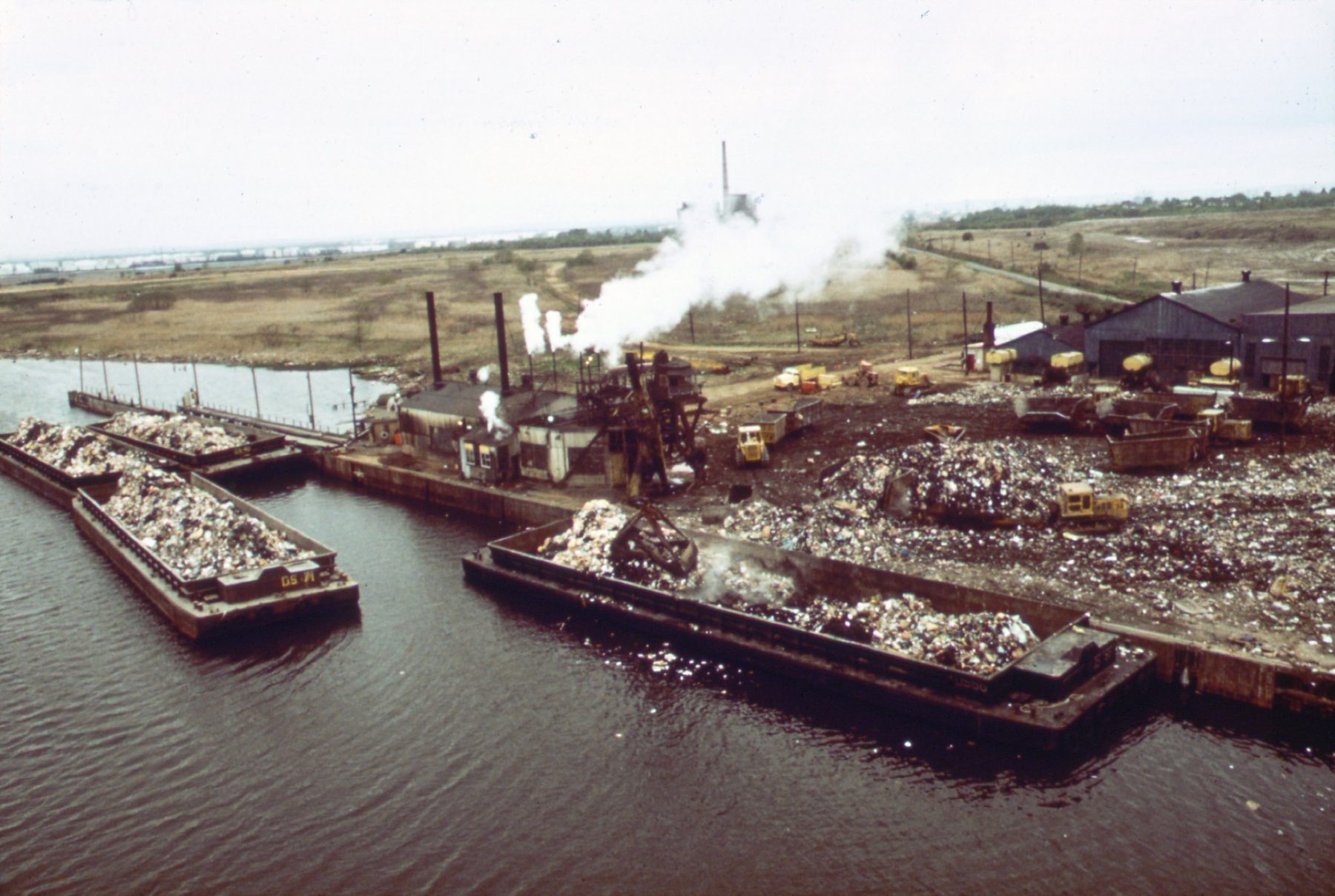
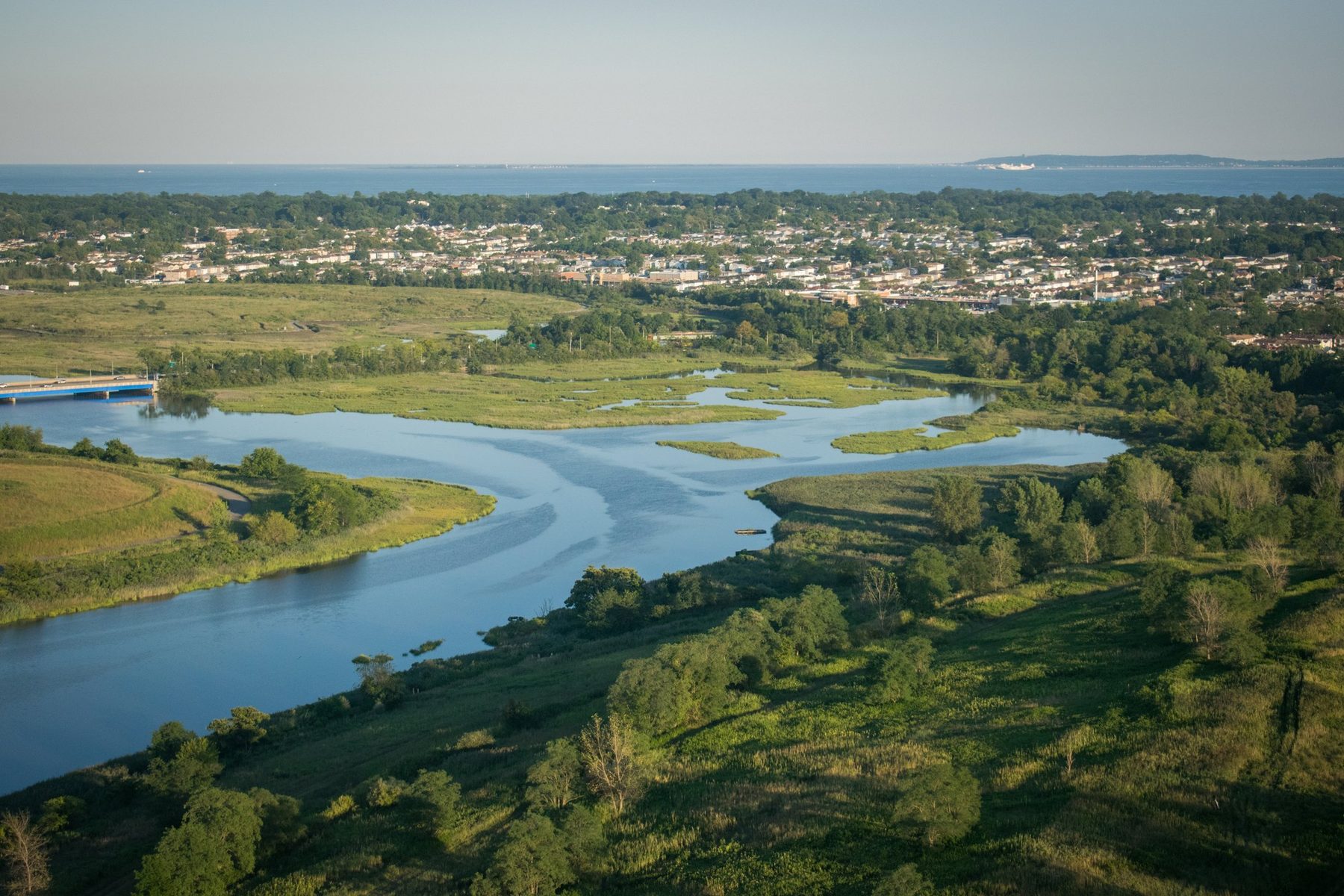
Fresh Kills took New York City's household waste by barge for half a century and closed in 2001 as the largest landfill in the world. What sits there now is 2,200 acres of capped mounds, tidal creeks, and returning grassland, roughly three times the size of Central Park, being opened in phases as Freshkills Park. The site is already a story about a landscape rebuilt from its own damage, which is the condition the folly is designed to read rather than correct.
In situ
Conceived as an artifact of another time, the structure carries the quiet authority of a ruin. It is weathered, enigmatic, and discovered. Drawing from the lineage of architectural follies, it privileges experience as much as utility. Set lightly within the terrain, it frames views, catches light, and guides movement, operating as a subtle counterpoint to the landscape.
Form-based ecological systems
The wind rose maps the frequency and intensity of winds, translating invisible atmospheric forces into radial geometry. Rather than privileging a single direction, it reveals a shifting field of dominant and intermittent flows. The structure draws directly from this logic, where lengths, angles, and spacing vary in response to localized data.
Credits and notes
The 1973 view of the Fresh Kills landfill is from the U.S. Environmental Protection Agency's DOCUMERICA project, held by the National Archives. The contemporary aerial is a Freshkills Park site photograph. Both are used here as site documentation; the folly, its siting, and its performance claims are proposed rather than actual.